5 Hidden Features of the Nothing Phone 3 You Must Know About
The Nothing Phone 3 positions itself as a smartphone for people who care about design and a thoughtful software experience, but beneath the familiar frameless glass and signature Glyph aesthetic are several lesser-known capabilities that materially improve daily use. This article explores five hidden features that prospective buyers and current owners should know about, explains how they are useful in real-world situations, and offers a broader product analysis, pros and cons, a comparison table, and a buying guide to help decide whether the Nothing Phone 3 is the right phone for them.
Why these hidden features matter
Buyers typically care about battery life, camera quality, software longevity, privacy, and the small conveniences that make a phone feel personal and efficient. Hidden or under-documented features often deliver outsized value: they solve friction points without requiring faster silicon or larger batteries. The Nothing Phone 3’s design ethos places emphasis on small innovations; the features below are the kind of refinements that change how a phone is used in everyday life.
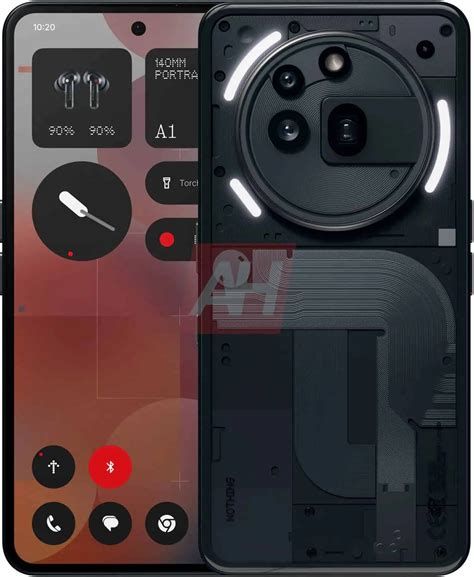
Five hidden features and how to use them
1. Contextual Glyph lighting (beyond basic notifications)
Most users know the Glyph interface as a flashy notification light on the rear. What is less obvious is the Phone 3’s ability to map Glyph patterns and colors to contextual system states and app events, not just simple notification types. Owners can assign custom patterns to calendars, rideshares, battery thresholds, and even camera countdowns. The result is a quick glanceable language on the back of the phone that communicates more than a vibration or on-screen alert.
Real-world use cases:
- During meetings, a specific short triple-pulse can indicate an urgent calendar event without audible interruption.
- Photographers using remote shutter or long-exposure timers can see a visual countdown from the rear lights—especially useful when the phone is mounted in awkward positions.
- When traveling, a distinct pattern for navigation directions makes it easier to keep the phone face-down in a map pocket and still know when to turn.
2. App-specific haptic profiles
Haptics are no longer a one-size-fits-all buzz. The Phone 3 includes per-app haptic profiles that let users dial down or change the haptic signature based on the app and even the kind of notification within the app. Rather than simply toggling vibration on or off, users can make message vibrations subtle while keeping navigation or camera feedback more pronounced.
Real-world use cases:
- In a theater or cinema, message vibrations are minimized to avoid distraction while camera and accessibility feedback retain stronger patterns.
- For accessibility, distinct haptic textures can represent different contact groups or message priorities for users who rely on touch cues.
3. Pro video mode with real-time waveform and stabilization tuning
Beyond basic camera improvements, the Phone 3 hides a video mode targeted at creators who want control without lugging a separate camera. It exposes a live waveform/levels readout to judge exposure, selectable stabilization algorithms (prioritizing crop stability vs. field of view), and quick access to natural-log-like profiles for colorists. These tools make handheld shooting and quick on-the-go edits more predictable.
Real-world use cases:
Find top-rated Mobile Phones products at great prices.
Shop Amazon →- Independent journalists can monitor exposure and stabilization while walking through dynamic lighting—reducing post-production surprises.
- Content creators can switch to a stabilization mode that preserves a wider field of view for vlogging, or choose more aggressive stabilization for steady cinematic shots.
- Filmmakers who want consistent grading can shoot in the more neutral profile and avoid heavy in-camera sharpening or contrast curves.
4. Predictive battery health and adaptive charging schedules
Long-term battery health is a frequent buyer concern. The Phone 3 includes a hidden predictive battery manager that learns charging habits and delays top-up cycles to reduce time spent at 100% when the device does not need it. It factors in user schedules, travel plans entered in the calendar, and typical overnight charging patterns to deliver smarter, less damaging charge cycles.
Real-world use cases:
- For someone who charges overnight, the phone will hold charging at around 80–90% and finish topping up minutes before the wake time, reducing peak battery stress.
- When a long flight is detected in calendar or travel mode, the phone can conserve battery health by avoiding unnecessary top-ups during transit.
- Commuters with predictable schedules benefit from a battery that will reach capacity just in time for departure rather than staying at 100% for hours.
5. Local Privacy Mode (Private Space)
Privacy is increasingly a differentiator. Hidden in the settings is a local Private Space that isolates apps, photos, and files behind a separate authentication method. Unlike cloud-based secure folders, this mode creates a sandboxed environment on-device that does not sync by default. It’s designed for one-off needs—a private gallery for sensitive documents, a separate messaging app profile, or a discreet home screen for specific contexts.
Real-world use cases:
- Business users can keep sensitive documents and client conversations in a separate space without mixing them with personal apps.
- Parents who lend the phone to children can switch to a limited private space so personal messages and payments stay inaccessible.
- People in shared accommodations or public environments can quickly switch to an alternate home screen to conceal personal apps.
Detailed product review and analysis
The Nothing Phone 3 builds on the company’s design-first approach. Externally, the distinctive Glyph identity remains a key differentiator: it is not purely cosmetic but increasingly functional, as the contextual controls demonstrate. The industrial design emphasizes a clean, transparent aesthetic that appeals to buyers who want a device that stands out without flashy logos. Ergonomically, the Phone 3 is comfortable to hold and the button placements suit one-handed use for most people.
On software, the device leans into a curated Android experience with extra customization—notably the Glyph and the haptic and camera toolsets described earlier. This combination suits users who appreciate a mostly-stock Android feel but want small, thoughtful enhancements that improve daily workflows.
Camera performance has been tuned for versatility. The pro video controls and stabilization options give the Phone 3 an advantage for creators who prefer to shoot and edit on-device. Photo mode remains competitive for casual and enthusiast shooters; real-world performance favors natural color rendering and reliable HDR handling in mixed lighting.
Discover deals on Mobile Phones — updated daily.
See Deals →Battery and charging strike a pragmatic balance. The adaptive charging and predictive battery features benefit longevity and daily convenience, but buyers who need very long single-charge endurance should still consider usage patterns and possibly pair the phone with battery-friendly practices or portable power. Connectivity and sensors are up to modern standards, covering the bases buyers care about: accurate GPS, reliable Wi‑Fi, and competent Bluetooth performance for earbuds and accessories.
Finally, the Phone 3’s ecosystem is focused rather than expansive. Instead of trying to replicate an ecosystem of appliances, Nothing concentrates on software polish, accessory compatibility, and partnerships that add utility without overwhelming the user with redundant services.
Pros & Cons
- Pros:
- Unique and useful Glyph-based contextual notifications that add glanceable clarity.
- Pro-level video tools and selectable stabilization make handheld shooting more reliable.
- Per-app haptic customization improves usability and accessibility.
- Predictive charging and battery health features extend long-term battery life.
- Local Private Space offers on-device privacy without cloud dependency.
- Cons:
- Feature discoverability—some hidden tools require digging in settings to enable or configure.
- Fewer first-party accessories and a smaller ecosystem than some established brands.
- Power users who expect highly aggressive camera tuning out-of-the-box may need third-party workflows for certain advanced looks.
- Some advanced features (video waveform, private space) have a learning curve for non-technical users.
Quick comparison: Nothing Phone 3 vs Nothing Phone 2 vs Typical Android flagship
| Feature | Nothing Phone 3 | Nothing Phone 2 | Typical Android flagship |
|---|---|---|---|
| Contextual rear Glyph lighting | Expanded (app and system mapping) | Basic notification patterns | Generally not present |
| Per-app haptic profiles | Yes (fine-grained) | Limited | Rare / vendor-dependent |
| Pro video tools (waveform, stabilization tuning) | Integrated and accessible | Limited pro controls | Some flagships offer pro video, but UI varies |
| Predictive battery health & adaptive charging | Advanced learning-based scheduler | Basic adaptive charging | Feature exists but implementations vary |
| Local Private Space | Yes (on-device sandbox) | No native sandbox | Some offer secure folders or work profiles |
Buying guide: who should consider the Nothing Phone 3
The Nothing Phone 3 is a strong candidate for buyers who value design and subtle software innovations over sheer headline hardware numbers. Below are practical considerations to help decide if it’s the right fit.
Buy it if...
- The buyer values a distinctive design language and wants a phone that stands out visually without being ostentatious.
- They frequently shoot video and would benefit from integrated stabilization options and exposure tools that reduce editing time.
- They appreciate privacy-first features like a local sandbox and prefer on-device controls over cloud services.
- They want a polished Android experience with meaningful refinements—customizable haptics, contextual rear lighting, and battery health features.
Consider alternatives if...
- They need the broadest possible accessory and service ecosystem (warranties, trade-in programs, brand-specific peripherals).
- Ultra-heavy users require best-in-class battery endurance out of the box, or very specific camera hardware capabilities.
- They prefer a device with long-standing enterprise management features for corporate deployment; some competitors may offer more mature enterprise tooling.
What to check before buying
- Carrier compatibility and supported bands in the buyer’s region.
- Software update policy and how many major Android releases are promised.
- Storage configuration and whether the chosen tier matches typical photo/video usage.
- Available accessories (cases, chargers) and whether the buyer prefers wireless charging or fast wired options.
- How familiar the buyer is with advanced features; some features are powerful but require setup to be most effective.
Practical setup tips to get the most out of hidden features
To benefit from the Phone 3’s hidden capabilities, a short setup session is recommended:
- Open the Glyph customization panel and map patterns to the most-used apps (messaging, rideshare, calendar).
- Visit haptic settings and set profiles: quiet for messaging, stronger for navigation and camera feedback.
- Enable predictive charging and enter regular sleep/wake schedules if prompted; this will let the device learn and protect battery health.
- Try the pro video mode in a well-lit environment first to learn waveform readouts and stabilization trade-offs before relying on it for important shoots.
- Set up the Local Private Space and test accessibility to ensure the authentication method and backups (if any) meet privacy expectations.
Conclusion
The Nothing Phone 3 is more than a refresh; it is a study in how small, carefully executed features can improve the user experience in substantive ways. The contextual Glyph, per-app haptics, creator-focused video tools, predictive battery management, and local privacy mode are the kind of hidden capabilities that show attention to daily workflows. For buyers who care about design and thoughtful software niceties, the Phone 3 is worth close consideration. Like any device, it has trade-offs—discoverability and ecosystem scale among them—but for users who prioritize an intuitive, refined daily experience, these hidden features turn routine tasks into smoother, smarter interactions.